Kinda Sweet Kinda Savage Leopard Print Review
As an embroidery designer who has spent countless hours digitizing and testing files for client projects, I have learned that the difference between a bestseller and a scrap bin reject often comes down to one thing: practical usability. When I first encountered the Kinda Sweet Kinda Savage Leopard Print, my immediate reaction was not just about aesthetics, but about application. This design, created by Caty Catherine, presents a bold juxtaposition of attitude and style that demands careful consideration before it hits the hoop.
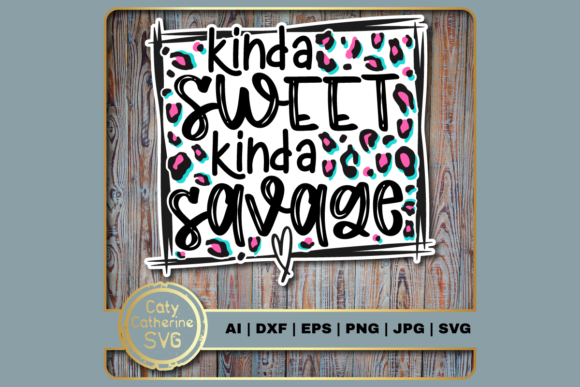
The visual personality of this piece is striking. It balances the wild, organic nature of leopard spots with a confident, modern quote layout. For those of us in the Crafts and Graphics space, finding assets that bridge the gap between trendy digital art and stitchable reality is a constant challenge. This design feels like it belongs in the hands of makers who want to create products with a distinct voice, rather than generic, mass-produced items.
First Impressions and Design Mood
The mood created by Kinda Sweet Kinda Savage Leopard Print is unapologetically confident. It appeals to a demographic that embraces duality—soft yet strong, playful yet fierce. From a design perspective, the layout is crucial. The typography needs to be legible even when reduced in size, and the leopard elements must retain their character without becoming a muddy mess of stitches. In its vector form, the lines are clean, which is a promising sign for digitization potential. However, as any experienced embroiderer knows, a clean SVG does not always guarantee a clean stitch-out.
This design naturally leans toward projects that benefit from high visual impact. It is not subtle, nor should it be. It fits seamlessly into the world of custom apparel where the wearer wants to make a statement. Think of it as a centerpiece for a boutique brand looking to establish a recognizable aesthetic.
Real-World Application Scenarios
To truly evaluate this design, I imagined placing it on several common substrates used in my own small shop. The most compelling use case I visualized was a custom embroidered tote bag. A canvas tote provides a stable, flat surface that allows the intricate details of the leopard print and the text to shine. The contrast of thread against natural cotton or heavy-duty canvas creates a tactile, high-quality finished product that customers love.
Another strong contender is sweatshirt embroidery. Here, the design would sit prominently on the chest or back. The thickness of fleece or French terry cloth requires attention to stitch density, but the result can be incredibly luxurious. For baby embroidery, however, caution is advised. While the sentiment might appeal to modern parents, the complexity of the leopard pattern might be too dense for delicate infant skin or small garment panels. It is better suited for older children’s apparel or nursery decor items like pillow covers, where durability and visual weight are less concerning.
For Etsy sellers and craft business owners, this design offers versatility. It can be adapted for holiday embroidery gifts, such as personalized aprons for the hostess who loves a bit of edge, or caps where the curved surface adds a dynamic twist to the layout. The key is matching the product to the audience. This is not a shy design; it belongs on items that will be seen and noticed.
Technical Considerations for Stitching
When moving from a digital embroidery file to a physical object, technical hurdles arise. The leopard print elements likely require a mix of fill stitch and satin stitch to achieve depth. If the original design is intended as an applique design, the process changes significantly, requiring fabric placement and tack-down stitches. If it is a standard machine embroidery design, stitch density becomes the primary concern. High-density areas can cause puckering, especially on stretchy fabric or thin material.
I recommend testing the design on scrap fabric first. This is non-negotiable. Check how the thread colors interact with the fabric texture. Dark fabric backgrounds may require underlay adjustments to prevent the base color from showing through the lighter threads of the leopard spots. Conversely, on light fabrics, ensure that the shadowing or darker elements of the print do not look like dirt or errors.
Hoop size is another critical factor. Ensure your machine can accommodate the full dimensions of the design without needing to split it, unless you are experienced with multi-hoop techniques. For curved surfaces like caps, the distortion of the design must be accounted for during the digitizing or setup phase. A design that looks perfect flat may appear stretched or compressed when applied to a rounded crown.
Visual Appeal and Brand Value
In the competitive landscape of handmade products, visual appeal drives sales. Kinda Sweet Kinda Savage Leopard Print has the potential to enhance brand consistency for shops that focus on bold, empowering themes. It builds customer trust when the stitching is crisp and the design is clear. Muddy details or broken threads erode that trust quickly. Therefore, reviewing stitch clarity is essential before listing any item for sale.
For digital product sellers, offering this as part of a bundle of design assets can increase perceived value. However, always confirm licensing before selling finished items or digital products. The description indicates you receive SVG, PNG, EPS, DXF, and JPG formats, which is excellent for versatility across cutting machines and printers, but embroidery-specific formats like DST or PES are not explicitly listed. If you plan to use this for commercial embroidery projects, you must verify if the file is already digitized for embroidery or if you need to convert it yourself.
Practical Designer Notes
- Test on Scrap Fabric: Always run a test stitch-out to check for tension issues and thread breaks.
- Check Thread Color Contrast: Ensure the leopard spots stand out against the background fabric. Use a color chart to plan your palette.
- Review Stitch Density: If the design feels too stiff after stitching, consider reducing the density in your editing software.
- Confirm Hoop Size: Measure the design dimensions against your available hoops to avoid resizing distortions.
- Inspect Small Details: Zoom in on the lettering and tiny leopard spots. Are they large enough to stitch cleanly?
- Use Proper Stabilizer: Match the stabilizer to the fabric weight. Cut-away for stretchy knits, tear-away for stable wovens.
- Verify Licensing: Read the terms provided by Caty Catherine carefully. Understand the limits of commercial use for both physical and digital sales.
In conclusion, Kinda Sweet Kinda Savage Leopard Print is a potent tool for the creative entrepreneur. It offers a blend of trendiness and timelessness that, when executed with technical precision, can elevate a simple handmade product into a desirable boutique item. By respecting the technical requirements of embroidery and understanding the emotional resonance of the design, you can create pieces that truly connect with your audience.