Reviewing Bless This Mess Dirty Dishes Kitchen for Embroidery
As a designer who spends half my life digitizing and the other half stitching, I have learned to look past the flashy thumbnails on marketplace listings. What matters is how a design behaves under the needle. Recently, I evaluated Bless This Mess Dirty Dishes Kitchen, a quote-based graphic designed by Caty Catherine. While this asset is technically categorized under Crafts and Graphics as an SVG cut file, its potential for embroidery applications is worth exploring for those of us who bridge the gap between digital vectors and physical thread.
First Impressions: Mood and Layout
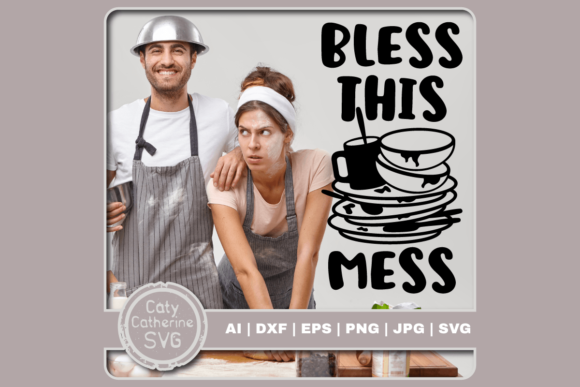
The phrase "Bless This Mess" paired with "Dirty Dishes" carries a specific cultural weight. It speaks to the chaotic reality of modern home life, offering humor rather than perfection. Visually, the layout relies heavily on typography. In embroidery, text is unforgiving. My first observation was the balance between legibility and decorative flair. The design does not appear overly dense, which is a relief. Overly complex scripts often turn into unreadable blobs of thread when scaled down for smaller hoops.
The mood is casual and inviting. It fits naturally into the aesthetic of farmhouse decor or modern rustic interiors. For an embroidery project, this means the design needs to feel handcrafted, not industrial. The visual personality suggests a relaxed approach, making it ideal for items that see daily use rather than delicate display pieces.
Real-World Application: The Kitchen Towel Test
To understand the practical value of Bless This Mess Dirty Dishes Kitchen, I imagined applying it to a standard waffle-weave kitchen towel. This is a common request for small shop products and Etsy sellers. The texture of a towel presents challenges. The loops can interfere with fine details. If this design were a traditional machine embroidery design with high stitch density, it might pucker the fabric or get lost in the weave.
However, since this is provided as an SVG, PNG, EPS, DXF, and JPG, the end-user must convert or trace it for embroidery software. This step is crucial. A direct auto-digitize of a complex SVG often results in poor stitch paths. I would recommend manually tracing the outlines to create clean running stitch borders or satin stitch fills, depending on the size. For a towel, a simple running stitch outline with a light fill stitch for larger letters would maintain the fabric's absorbency and drape.
Apparel and Home Decor Versatility
Beyond towels, this design has strong potential for custom apparel. Imagine it embroidered on the chest of a linen apron. The natural texture of linen pairs beautifully with the humorous sentiment. It also works well on tote bag designs. A canvas tote with this quote stitched in contrasting thread colors becomes a functional statement piece for grocery runs or market trips.
For sweatshirt embroidery, the design needs scaling. A large back print might require too many stitches, leading to stiffness. Instead, placing a smaller version on the left chest or sleeve creates a subtle, branded look. This approach appeals to boutique branding where subtlety equals sophistication. It transforms a basic garment into a personalized gift that feels thoughtful rather than mass-produced.
Technical Considerations for Stitchers
When working with quote-based graphics, stitch density is the enemy of comfort. If you are converting Bless This Mess Dirty Dishes Kitchen into an embroidery file, avoid heavy fill stitches in the center of letters. Use satin stitch for thicker strokes and running stitch for thin connectors. This reduces bulk and prevents the fabric from puckering, especially on stretchy fabrics like t-shirts or baby clothes.
Fabric texture plays a massive role here. On dark fabric, you must ensure high contrast in your thread colors. White or cream thread on navy blue cotton works well. On light fabric, consider using a darker tone to make the text pop. Always test the design on scrap fabric first. Check how the corners hold up. Sharp corners in vector files often become rounded or messy in embroidery if the stitch angles are not optimized.
Hoop size is another constraint. Ensure your chosen hoop accommodates the full width of the phrase without distorting the edges. For curved surfaces like caps, the design may need to be arched digitally before stitching to follow the contour of the hat. Without this adjustment, the text will look flat and awkward on a structured cap.
Commercial Viability and Brand Trust
For craft business owners and Etsy sellers, the appeal of Bless This Mess Dirty Dishes Kitchen lies in its relatability. Customers buy emotions, not just products. This design sells the idea of a lived-in, loved home. It builds customer trust because it feels authentic. However, professionalism is key. A sloppy stitch-out damages brand consistency. Ensure every finished product meets high standards of tension and trim quality.
Before selling items made with this design, you must confirm licensing. The product description lists formats like SVG, Transparent PNG, EPS, DXF, and JPG. It does not explicitly state commercial embroidery rights. As a responsible creative entrepreneur, you should contact the designer, Caty Catherine, or check the specific license terms associated with the purchase. Using a cut file for embroidery without proper clearance can lead to legal issues. Never assume that a digital embroidery file or cut file includes unlimited commercial rights for physical goods.
Practical Designer Notes
- Test on Scrap Fabric: Always run a test stitch on the same material you plan to use for the final product. This reveals issues with tension and stabilizer choice.
- Check Thread Color Contrast: View your design in black and white mockups to ensure readability regardless of color choices.
- Review Stitch Density: Keep density low for soft garments. High density makes items stiff and uncomfortable.
- Confirm Hoop Size: Measure the design dimensions against your machine’s maximum hoop capacity.
- Inspect Small Details: Tiny serifs or dots in the font may need to be removed or enlarged to stitch cleanly.
- Use Proper Stabilizer: For towels and stretchy fabrics, a cut-away stabilizer provides better long-term support than tear-away.
- Verify Licensing: Confirm whether the license allows for selling physical finished products or if it is for personal use only.
Final Verdict
Bless This Mess Dirty Dishes Kitchen is a versatile graphic with strong emotional appeal. While it arrives as a cut file, its simplicity makes it a strong candidate for embroidery conversion. It fits well in the niche of handmade product creation, offering a blend of humor and warmth. For the experienced stitcher, it presents a manageable challenge in balancing text legibility with fabric integrity. For the beginner, it serves as a good practice piece for mastering text-based embroidery.
Whether you are creating holiday embroidery gifts, nursery decor, or everyday kitchen accessories, this design holds up under scrutiny. Just remember that the digital file is only the starting point. The true value comes from how you interpret it through thread and needle. With careful attention to stitch type, density, and fabric choice, this design can elevate your small shop product line and delight your customers.