Reviewing the Fifth Grade Crew SVG for Real Embroidery Use
As a designer who spends half my life digitizing and the other half stitching, I look at every new machine embroidery design with a critical eye. It is not enough for a file to look cute on a screen; it must survive the tension of the hoop, the texture of the fabric, and the wash cycle. Recently, I evaluated the Fifth Grade Crew Svg, Teacher Shirt Svg to determine if it holds up in a professional setting. This is not just a digital asset; it is a potential revenue stream for Etsy sellers and craft business owners targeting the education market.
First Impressions and Visual Personality
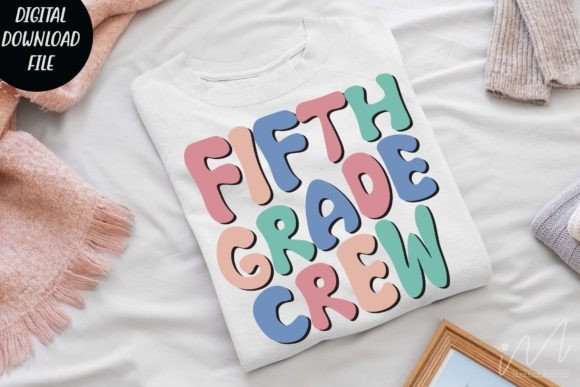
The initial appeal of this Graphics package lies in its thematic clarity. The quote-based layout speaks directly to school spirit and teacher pride. When I opened the files, I noticed the clean lines typical of well-constructed vector art. For an embroidery project, clean lines are non-negotiable. They translate into smoother stitch paths and fewer thread breaks.
The mood is cheerful yet professional. It avoids the overly childish tropes often found in elementary school designs, making it suitable for a wider range of apparel, from casual t-shirts to nicer polo shirts. The visual personality suggests camaraderie and team spirit, which is exactly what teachers look for when coordinating grade-level outfits. As a digital embroidery file, it offers flexibility, but as a stitched product, it needs careful handling to maintain that crisp, modern look.
Real-World Application: The Custom Sweatshirt Test
To truly understand the value of the Fifth Grade Crew Svg, Teacher Shirt Svg, I simulated a real client order. Imagine a fifth-grade teaching team wanting matching hoodies for spirit week. This is a common request in custom apparel shops. The design’s layout works exceptionally well on the chest or upper back of a sweatshirt.
However, because this is provided as an SVG, DXF, EPS, and PNG, it is technically a cut file format, not a native embroidery format like PES or DST. This distinction is crucial for embroidery designers. You cannot simply load an SVG into your embroidery machine. You must use software to convert these vectors into stitches. This step allows you to control the stitch density and type. For a sweatshirt, I would recommend using a combination of fill stitch for larger background elements if present, and satin stitch for the lettering to ensure readability. The transparency of the PNG background is helpful for creating printable mockup previews for your online store before you even touch the needle.
Material Considerations and Stitching Strategy
When working with fabrics like cotton blends or fleece, the stability of the material matters. If you are stitching this onto a stretchy jersey knit for a t-shirt, you must use a high-quality cut stabilizer. Without it, the text may pucker or distort, ruining the professional finish. For a tote bag design made of canvas, the fabric is stable, but the weave is coarse. In this case, increasing the stitch count slightly can help cover the texture of the fabric, ensuring the letters remain legible.
I also considered using this as an applique design. By cutting the text shape from felt or twill and stitching it down, you reduce the stitch count significantly. This is ideal for baby embroidery items where too many stitches can make the garment stiff and uncomfortable. An applique approach also adds a tactile dimension that customers love in handmade products.
Navigating Technical Challenges
While the design is versatile, there are areas where caution is required. Tiny lettering is the enemy of embroidery. If you scale the Fifth Grade Crew Svg, Teacher Shirt Svg down too small for a cap or a baby onesie, the threads may merge, turning distinct letters into a blob. Always test the design on scrap fabric first. Check the hoop size compatibility. A standard 4x4 hoop might be tight if the design includes decorative elements around the text.
Dark fabrics present another challenge. If you are stitching light-colored thread on a navy blue teacher’s shirt, you need high contrast. Review your thread colors carefully. A slight off-white might get lost, while a bright white pops. Additionally, inspect the corners of the letters. Sharp angles in SVGs can sometimes cause thread bunching if the digitizing settings are not adjusted to slow down at turns. This is where your skill as a designer comes into play—tweaking the underlay stitches to support the top stitching.
Commercial Viability and Brand Consistency
For small shop products and boutique branding, consistency is key. Using a reliable design like this helps build trust with buyers. When a customer receives a personalized gift that looks professionally finished, they are more likely to return. The Crafts community values quality over quantity. By taking the time to properly convert and stitch this SVG, you elevate it from a simple cut file to a premium finished product.
This design fits well into seasonal offerings. Think holiday embroidery for end-of-year gifts, or back-to-school promotions in August. It can be adapted for embroidered patch creation, which is a trending item in the maker community. Patches allow for experimentation with dense stitching and metallic threads, adding a unique flair to the standard design.
Essential Designer Notes
- Verify Licensing: Before selling commercial embroidery items, confirm the license terms associated with the SVG purchase. Some creators allow unlimited physical sales but restrict digital resale.
- Test on Multiple Fabrics: Do not assume the design will behave the same on linen as it does on polyester. Adjust tension and stabilizer accordingly.
- Check Color Contrast: Use black and white mockups to ensure the design reads clearly without color reliance. This is vital for accessibility and visual impact.
- Mind the Details: Inspect small serifs or decorative swirls. In embroidery, less is often more. Simplify complex vector details if they do not translate well to thread.
- Software Compatibility: Ensure your conversion software can handle the SVG paths correctly. Poor conversion leads to inefficient stitch paths and longer run times.
In conclusion, the Fifth Grade Crew Svg, Teacher Shirt Svg is a solid foundation for various design assets. It requires technical expertise to transform from a vector graphic into a high-quality stitched item, but that effort pays off in durability and aesthetic appeal. For makers and creative entrepreneurs, it offers a reliable template for creating meaningful, marketable goods. Just remember: the file is only the starting point. Your craftsmanship determines the final value.