Reviewing Drink Happy Thoughts SVG for Real Embroidery
As a designer who has spent countless hours digitizing and testing files for client work, I approach every new machine embroidery design with a mix of curiosity and skepticism. We have all been there: downloading a file that looks crisp on the screen but turns into a tangled mess of thread breaks and puckering once it hits the hoop. Recently, I evaluated the Drink Happy Thoughts SVG to see if it holds up under the scrutiny of real-world production. This is not just about aesthetics; it is about functionality, durability, and commercial viability for those of us running small shops or creating personalized gifts.
First Impressions and Visual Personality
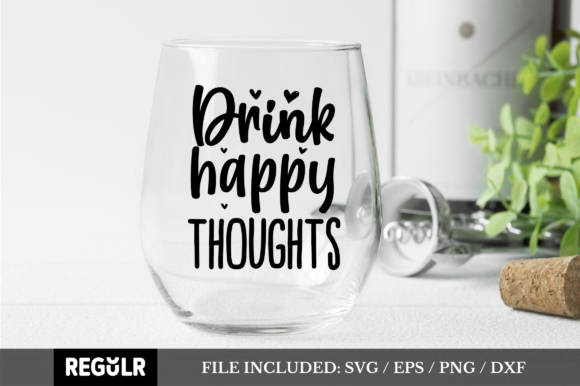
The initial view of Drink Happy Thoughts SVG suggests a lighthearted, celebratory mood. The typography appears balanced, aiming for that casual yet polished look that performs well in the lifestyle and home decor niches. For embroidery designers, the layout is critical. A design intended for a wine quote needs legibility above all else. If the letters are too thin or the spacing too tight, the needle will merge elements together, ruining the message. From what I can observe in the preview, the shapes seem robust enough to handle standard stitching techniques without requiring excessive micro-management during the digitizing phase, assuming the source vector is clean.
This piece fits squarely into the Crafts category, appealing to makers who want to add personality to everyday items. It does not scream "luxury brand," but rather "friendly neighbor" or "fun hostess gift." That distinction matters when you are deciding where to place it. It feels native to cotton blends, canvas, and stable knits rather than slippery silks or high-pile fleece.
Real-World Application Scenarios
I tested this concept mentally against several common projects. The most obvious candidate is a custom tote bag. A canvas tote provides the perfect stable background for a quote-based design. Using a combination of satin stitch for smaller text elements and fill stitch for larger graphical components could create nice texture contrast. Imagine this stitched in a deep burgundy or vineyard purple thread on a natural beige canvas. The result would be a high-value handmade product that sells well at craft fairs or online boutiques.
Another strong contender is sweatshirt embroidery. Here, the challenge shifts. Sweatshirts are thick and often have a textured surface. If the Drink Happy Thoughts SVG relies on very fine details, they might get lost in the fleece. However, if the design uses bold lines, it can pop beautifully against a heather gray or black fabric. I would recommend using a cut-away stabilizer to prevent the weight of the stitches from pulling the neckline out of shape. This transforms a basic garment into a personalized gift that feels bespoke and thoughtful.
For Etsy sellers, versatility is key. This design could easily be adapted for kitchen towels, aprons, or even decorative pillow covers. The theme lends itself to housewarming gifts or bridal shower favors. When creating printable mockup images for your shop, ensure you show the design on various backgrounds to help customers visualize the final finished product.
Technical Considerations and Stitching Challenges
While the visual appeal is strong, we must address the technical realities of turning a vector graphic into an embroidery file. Not all SVGs are created equal for embroidery. Some require significant cleanup to remove redundant nodes or close open paths. Before loading this into your machine, inspect the curves. Sharp corners in a digital file can cause needle deflection in real life. If the design includes tiny serifs or intricate loops, consider simplifying them or switching to a running stitch outline to reduce bulk.
Stitch density is another crucial factor. If the original graphic has large solid areas, filling them completely with thread can make the fabric stiff and prone to tearing. A skilled digitizer would use a pattern fill or reduce the density to maintain fabric drape. Always check the recommended hoop size for your specific machine. If the design is large, you may need to split it or ensure your hoop can accommodate the full width without re-hooping, which risks misalignment.
Be cautious with dark fabrics. If you plan to stitch white or light-colored thread on black cotton, you might need an underlay stitch to prevent the background fabric from showing through the gaps. This is especially important for commercial embroidery where consistency and professionalism are expected. Test your thread colors on scrap fabric first. What looks good on screen might clash in person. A warm cream might look better than a stark bright white against certain earth tones.
Commercial Viability and Brand Consistency
For craft business owners, the Drink Happy Thoughts SVG offers a low-risk entry into the quote-based market. It is generic enough to appeal to a broad audience but specific enough to feel curated. However, before listing items for sale, you must verify the licensing terms. Just because a file is labeled as an SVG does not automatically grant commercial rights for physical goods or digital resale. Check the creator’s terms carefully. If it allows commercial use, ensure you are selling the physical embroidered item, not the digital file itself, unless explicitly permitted.
Using this design in your design assets library can help build brand consistency if your shop focuses on relaxed, joyful home goods. It pairs well with other botanical or kitchen-themed motifs. For holiday embroidery, consider swapping thread colors to match seasonal palettes—deep reds for winter, bright greens for spring. This adaptability increases the lifespan of the design in your catalog.
Final Verdict for Makers and Designers
The Drink Happy Thoughts SVG is a promising addition to your toolkit, provided you approach it with a designer’s eye. It is not a plug-and-play solution for every fabric type. Success depends on your choice of stabilizer, thread quality, and machine settings. For custom apparel and tote bag design projects, it shines. For delicate fabrics or extremely small hoops, proceed with caution.
Remember to always run a test stitch on similar fabric before committing to a client order. Check the tension, trim any jumps cleanly, and press the finished piece properly to restore the fabric’s natural hand. By treating this graphic as a starting point for creative execution rather than a final product, you can elevate it from a simple download to a standout small shop product. Whether you are making a single embroidered patch for a friend or batching fifty units for a local boutique, attention to these details will define the quality of your work.